
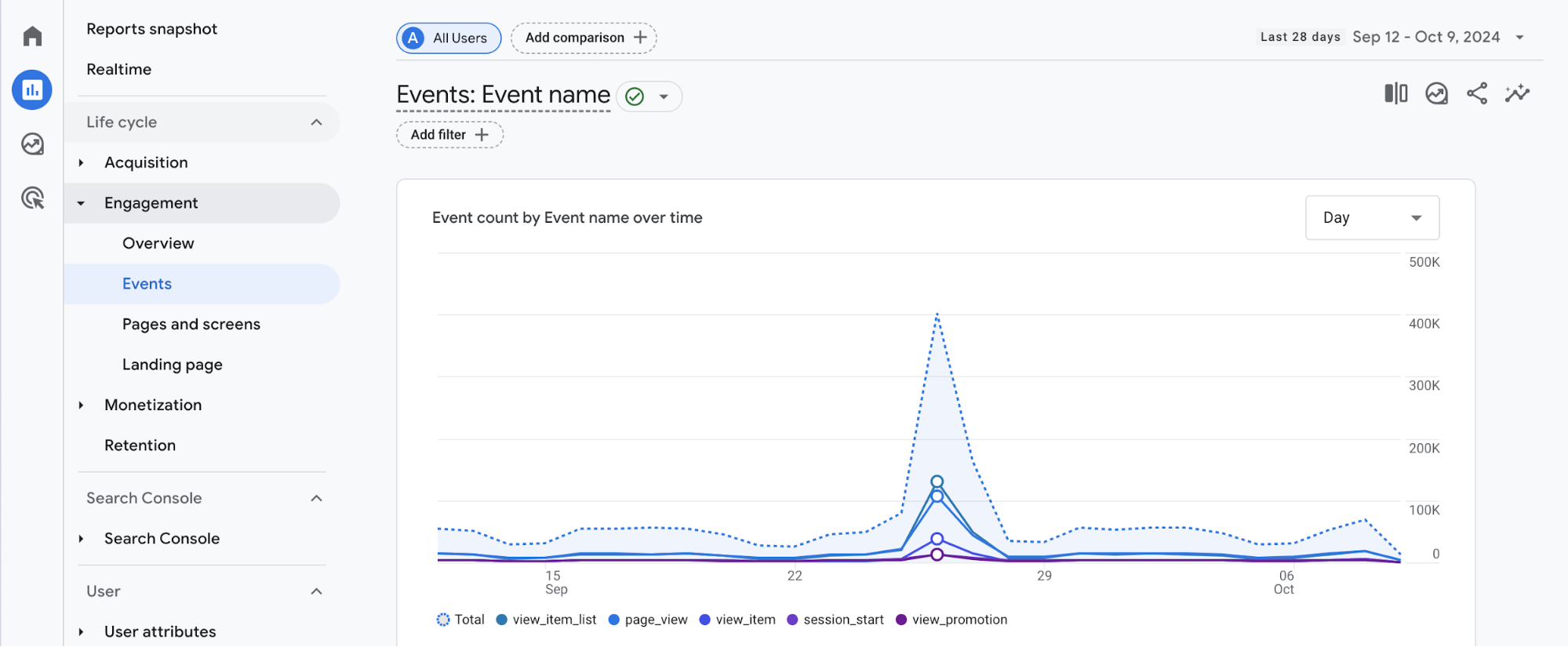
Welcome to the ultimate GA4 glossary! In this comprehensive guide, you will find key terms that are essential for understanding Google Analytics 4. Whether you are a novice or an expert, this glossary will enhance your GA4 knowledge. For a deeper dive, don’t forget to visit our ga4 glossary.
What is Google Analytics 4 (GA4)?
Google Analytics 4, abbreviated as GA4, is the latest version of Google’s web analytics platform. GA4 provides enhanced tracking capabilities, allowing businesses to gather more insightful data across websites and mobile applications. Its user-centric data model differs from its predecessor, Universal Analytics, focusing on events rather than sessions.
Key Terms in GA4
1. Event
In GA4, an event refers to any interaction that a user has with your content. Events can include clicks, page views, form submissions, and more. Each event can be customized to capture the exact data you need.
2. User
A user represents an individual who interacts with your website or app. GA4 uses these interactions to create a complete picture of user behavior over time.
3. Session
A session is a group of user interactions that take place within a given timeframe. In GA4, a session can include multiple events and page views. A session begins when a user interacts with your site or app and can last for up to 30 minutes of inactivity.
4. Engagement
Engagement metrics in GA4 help you understand how users interact with your content. This includes metrics like engaged sessions, engagement rate, and average engagement time.
5. Conversion
Conversions are key user interactions that are valuable to your business, such as completing a purchase or signing up for a newsletter. In GA4, you can mark specific events as conversions to track their performance effectively.
Data Collection and Privacy in GA4
6. Data Streams
Data streams in GA4 are sources of data for your property. You can create different streams for web and app data, allowing you to analyze user behavior across different platforms.
7. Measurement Protocol
Measurement Protocol enables developers to send data directly to GA4 from any device that can send HTTP requests. This allows for tracking of virtually any interaction, which can then be analyzed within the GA4 interface.
8. DebugView
DebugView is a tool in GA4 that allows you to view real-time data from your property. This feature is especially useful for testing and verifying that events and parameters are being captured correctly.
GA4 Features and Benefits
9. BigQuery Integration
GA4 offers seamless integration with BigQuery, Google’s serverless data warehouse. This feature allows users to perform advanced queries and analyze large datasets without the need for additional infrastructure.
10. Predictive Analytics
One of the standout features of GA4 is its use of machine learning for predictive analytics. This capability helps you identify potential trends, forecast user behaviors, and make better data-driven decisions.
11. Cross-Device Reporting
GA4 provides enhanced cross-device reporting, allowing you to track users across multiple devices. This is crucial in today’s multi-device world, helping you understand the user journey better.
Implementing GA4
12. Setup Assistant
The Setup Assistant in GA4 is a guided process that helps you configure your properties and implement the necessary tracking codes. This tool simplifies the initial setup process, making it easier for newcomers.
13. User Interface (UI)
The GA4 user interface is designed to be more intuitive than its predecessor. Key metrics are presented in a simplified manner, enabling users to access important data quickly.
Common Challenges and Solutions
14. Data Sampling
Data sampling occurs when GA4 only processes a subset of data for large queries. It can impact the accuracy of your reports. To minimize sampling, focus on analyzing smaller date ranges or use BigQuery for deeper analysis.
15. Migration from Universal Analytics
The transition from Universal Analytics to GA4 can be challenging due to differences in data models and features. Ensure you familiarize yourself with GA4’s new terminology and functionalities to ease the migration process.
Conclusion
In summary, understanding the key terms associated with Google Analytics 4 is crucial for effectively leveraging this powerful analytics tool. Familiarizing yourself with the GA4 glossary not only facilitates better data analysis but also empowers you to make informed decisions that enhance user experience and drive business growth. By embracing GA4 and its innovations, you are setting the stage for a more data-driven future.